
SeaShell
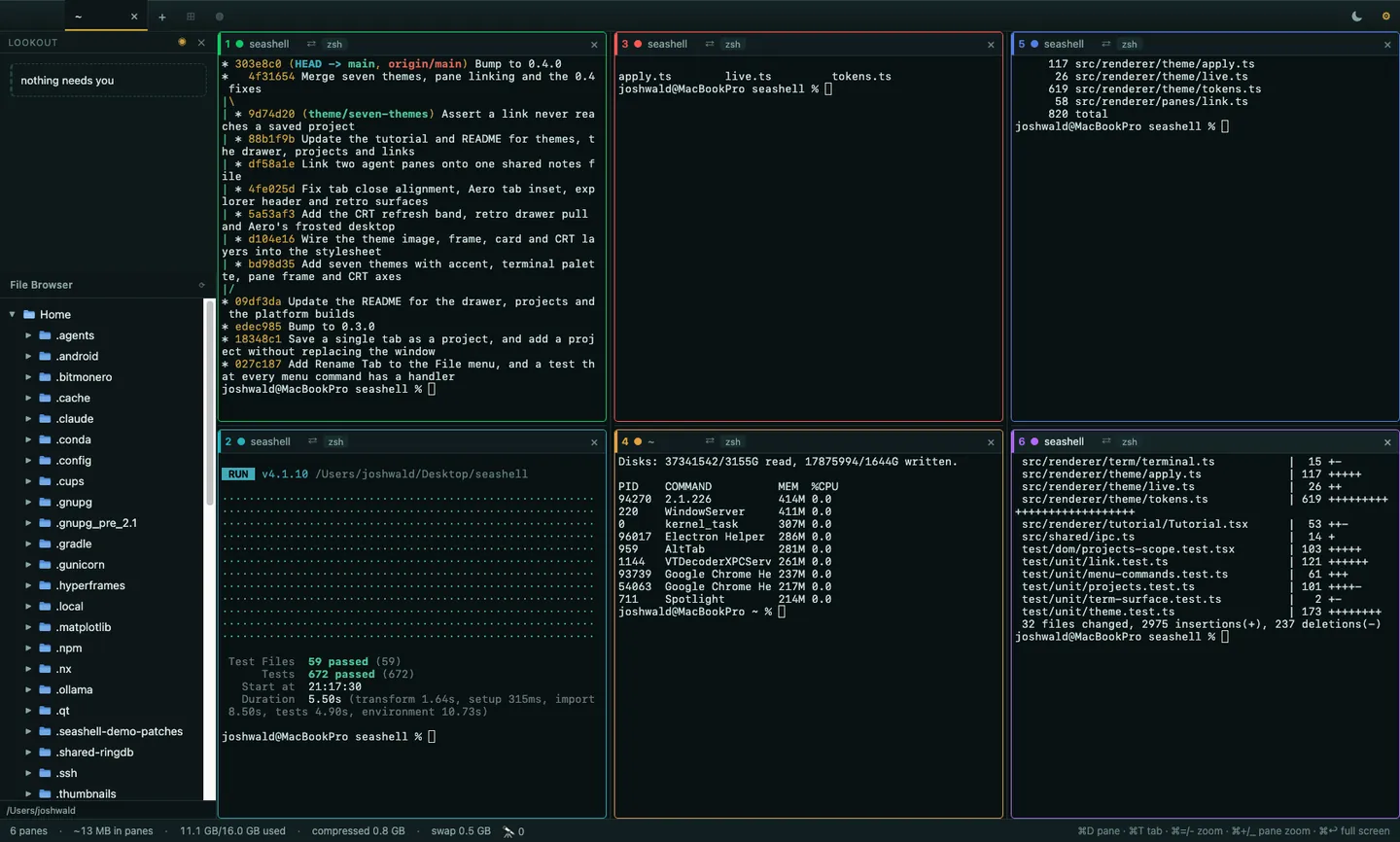
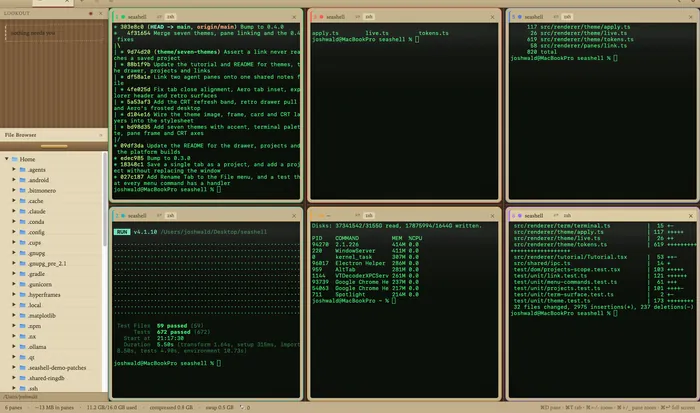
A terminal for running several Claude Code sessions at once. Up to six panes tile in one window, a file explorer sits beside them, and a card appears the moment a session stops to ask you something.
It works with any terminal program. Every design decision that had a tie-breaker was settled in favour of watching several long-running agent sessions at once, because that is what it is for.
Download
macOS universal .dmg, 209 MB · Windows .zip, 146 MB · Linux .AppImage, 122 MB
The macOS build is universal, so it runs natively on Apple Silicon and Intel with no Rosetta. macOS is the reference platform. The Windows and Linux builds are experimental, and the whole thing is pre-alpha and still moving.
First launch will fail, and the app is fine. macOS refuses to open it the first time, saying either that the developer cannot be verified or that the app is damaged. That is because it was not signed with a paid Apple Developer ID, so your browser flagged it on the way down. Clear the flag once:
If you would rather not use a terminal for it, open System Settings, go to Privacy and Security, scroll to the message about SeaShell and click Open Anyway. On Sequoia and later that is the only click-through route, because Apple removed the old right-click and Open shortcut.
Lookout
Running six agents means somebody still has to notice the one that stopped to ask a question. Lookout does that noticing. When an unfocused pane goes idle on a question, a card appears in a rail beside the panes with the question on it, and a badge in the status bar counts everything waiting on you.
- Built in, no setup. SeaShell watches for a Claude pane sitting idle on a question and raises a card with canned replies: Continue, Yes, No, or jump to the pane. No config, no tokens, no external process, on every platform.
- Drafted replies, with the companion plugin. Install c-assistant and a Stop hook drafts a one-line reply in your own voice, then pushes a richer card you can approve, edit or deny.
The safety rule is the same either way: an external tool can only propose a card. Nothing types into a pane without you.
What it does
- Tiled panes. Each tab holds an auto-arranged grid of up to six terminals. Drag the borders to resize. Double-click a title bar to zoom a pane to the full tab, again to put it back.
- Any command per pane. A pane is just a PTY. Run a shell, a build watcher, an SSH session or a coding agent. Full-screen programs render exactly as they do in a native terminal, including 24-bit colour and correct glyph widths.
- Paths become clickable. Any filesystem path printed in a pane is checked against disk. Double-click it and the explorer expands to that file and highlights it. Nothing is opened behind your back.
- Preview panes. Open a file and it becomes a pane beside your terminals with syntax highlighting, or point a web preview at a URL and watch a dev server render next to the pane running it.
- A scratch shell for each pane. ⌘J opens a drawer over the grid, and every pane gets its own, starting in that pane's directory. A quick status check costs neither a new pane nor an interruption to the agent running in one.
- Closing a pane means it. Closing runs an escalating kill ladder across the whole process tree, including background jobs that forked away from the shell. If anything survives, it tells you instead of pretending the pane was clean.
- Projects save arrangements. A project stores a set of panes by name and reopens them later with each directory, colour and layout, resuming a pane's Claude Code session where you can watch it.
Press ⌘/ in the app for a short tutorial of the parts that are not guessable.
Themes
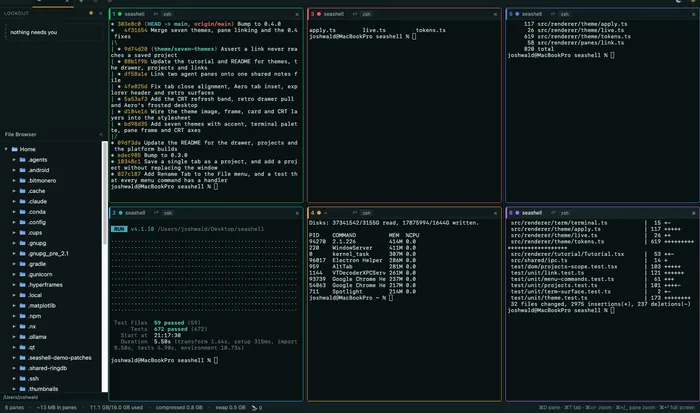
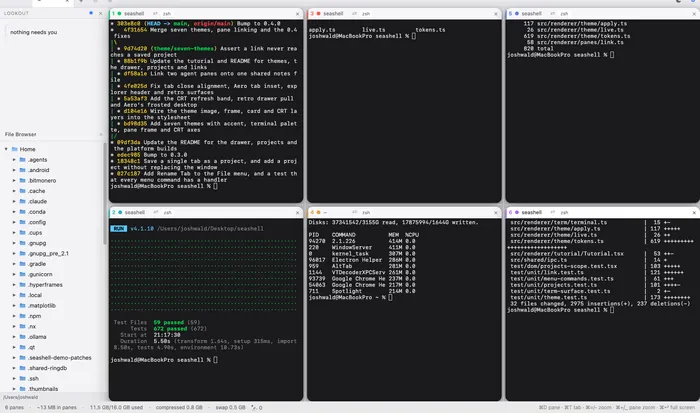
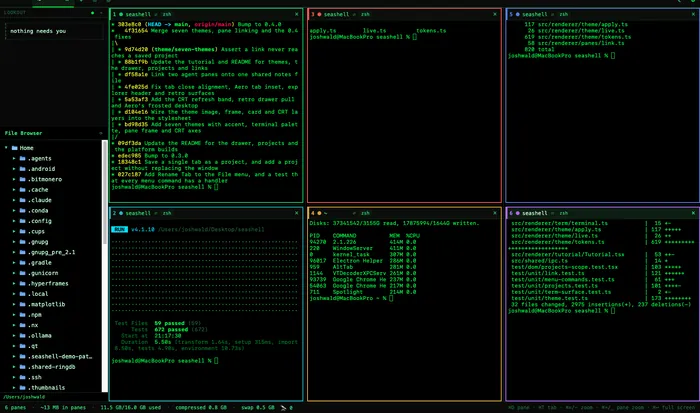
Seven ship with it. Four of them: